
Tirzepatide for Sleep Apnea: A Pharmacist’s Guide to the Label, Pen Use and Interactions
Tirzepatide for sleep apnea from a pharmacy perspective: what the approval covers, key label warnings, using and storing the pen, interactions, side effects and CPAP questions.

Pharmacist’s summary
Tirzepatide, sold as Zepbound, is approved in the United States for moderate to severe obstructive sleep apnea in adults with obesity, used with a reduced-calorie diet and more physical activity. In clinical trials it reduced breathing interruptions during sleep compared with placebo, mainly through weight loss. It is a once-weekly injection with important warnings, interactions and practical handling steps, and it does not automatically replace CPAP.
When a medicine gains a new approved use, patients often hear about it first from the news, then arrive at the pharmacy counter with practical questions. Is this the same drug my friend takes for diabetes? How do I use the pen? Can I stop my CPAP? Will it interact with my other prescriptions? Tirzepatide’s approval for obstructive sleep apnea has prompted exactly these conversations.
This guide answers them from a pharmacy perspective. It covers what sleep apnea is, what the tirzepatide sleep apnea approval covers, how to read the key parts of the label, how to use and store the medicine safely, which interactions and side effects to watch for, and what tirzepatide does and does not change about the rest of your sleep apnea treatment.
Sleep Apnea in Brief
The National Heart, Lung, and Blood Institute describes sleep apnea as a common condition in which breathing stops and restarts many times during sleep, which can prevent the body from getting enough oxygen. Obstructive sleep apnea, the most common type, happens when the upper airway becomes blocked during sleep. Obesity, large tonsils and hormonal changes can all narrow the airway. Central sleep apnea is different: the brain does not send the usual signals to breathe.
NHLBI notes that untreated sleep apnea raises the risk of stroke, heart attack and other serious problems, and that poor sleep can affect concentration, memory and decision-making. This short NHLBI video explains the symptoms and health effects:
How Sleep Apnea Is Diagnosed
Sleep apnea cannot be confirmed from symptoms alone. Common warning signs include loud snoring, pauses in breathing noticed by a bed partner, gasping or choking at night, morning headaches and daytime sleepiness, but a sleep study is needed to diagnose it and measure how severe it is. That study may take place in a sleep laboratory or at home with a portable device. It produces the apnea-hypopnea index (AHI), which helps your clinician decide whether you have mild, moderate or severe obstructive sleep apnea, and therefore whether tirzepatide’s approved use applies to you. If you are starting tirzepatide, ask whether a follow-up sleep study is planned to measure your response.
The Usual Treatments
NHLBI’s overview of how sleep apnea is treated lists healthy lifestyle changes, breathing devices such as positive airway pressure (PAP) machines, mouthpieces, implants and, when other options do not work, surgery. PAP therapy, often called CPAP, uses gentle air pressure to keep the airway open while you sleep and remains a mainstay of treatment for moderate to severe obstructive sleep apnea.
Tirzepatide adds a medicine to that list for a specific group of adults. It does not replace the need for a proper diagnosis, and for many people it will sit alongside, rather than instead of, existing treatment.
Tirzepatide and Sleep Apnea: What Was Approved
Tirzepatide is a once-weekly injectable peptide medicine that activates receptors for two gut hormones, GIP and GLP-1. It lowers appetite and food intake, leading to weight loss in many people. In the United States, it is sold under two brand names with different approved uses. Mounjaro is approved for type 2 diabetes. Zepbound is approved for chronic weight management and for moderate to severe obstructive sleep apnea in adults with obesity.
The sleep apnea approval was based on the SURMOUNT-OSA trials, two 52-week placebo-controlled studies in adults with obesity and moderate to severe OSA who did not have type 2 diabetes. One trial enrolled people not using PAP and the other enrolled people using PAP. In both, tirzepatide reduced the apnea-hypopnea index, the number of breathing interruptions per hour of sleep, substantially more than placebo: by about 20 more events per hour in the trial without PAP and about 24 more in the trial with PAP. The Peptides Blog’s review of tirzepatide’s sleep apnea trial results explains these figures in detail, including why they describe changes rather than final scores.
FDA considers the improvement likely related to weight loss. In other words, tirzepatide helps sleep apnea mainly by reducing one of its biggest drivers.
Reading the Label: What Matters Most
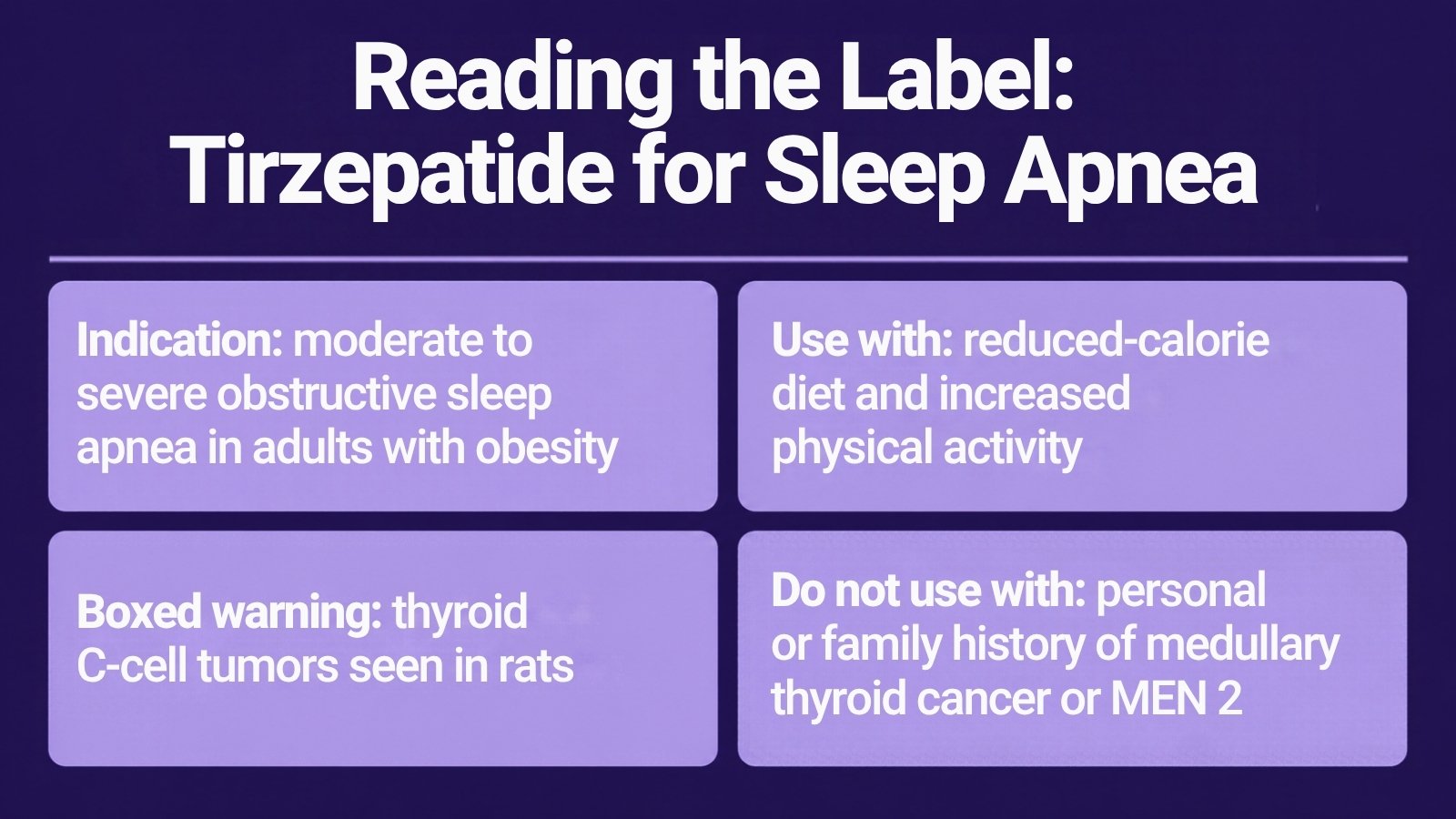
Our guide on reading a prescription medication label explains the general layout of drug labels. For tirzepatide in sleep apnea, four sections deserve particular attention.
Indication. The approved use is moderate to severe obstructive sleep apnea in adults with obesity, in combination with a reduced-calorie diet and increased physical activity. The trials did not study central sleep apnea, people without obesity, or children.
Boxed warning. Tirzepatide caused thyroid C-cell tumors in rats. Whether it causes these tumors in humans is not known. Report any lump or swelling in the neck, trouble swallowing, hoarseness or shortness of breath to your prescriber.
Contraindications. Tirzepatide should not be used by people with a personal or family history of medullary thyroid carcinoma, people with multiple endocrine neoplasia syndrome type 2, or anyone who has had a serious allergic reaction to tirzepatide or its ingredients.
Warnings and precautions. These include severe gastrointestinal reactions, pancreatitis, gallbladder problems, low blood sugar when combined with certain diabetes medicines, kidney problems linked to dehydration, allergic reactions and others listed in the full prescribing information. Always read the most current version of the label provided with your prescription.
Using the Pen and Storing It Safely
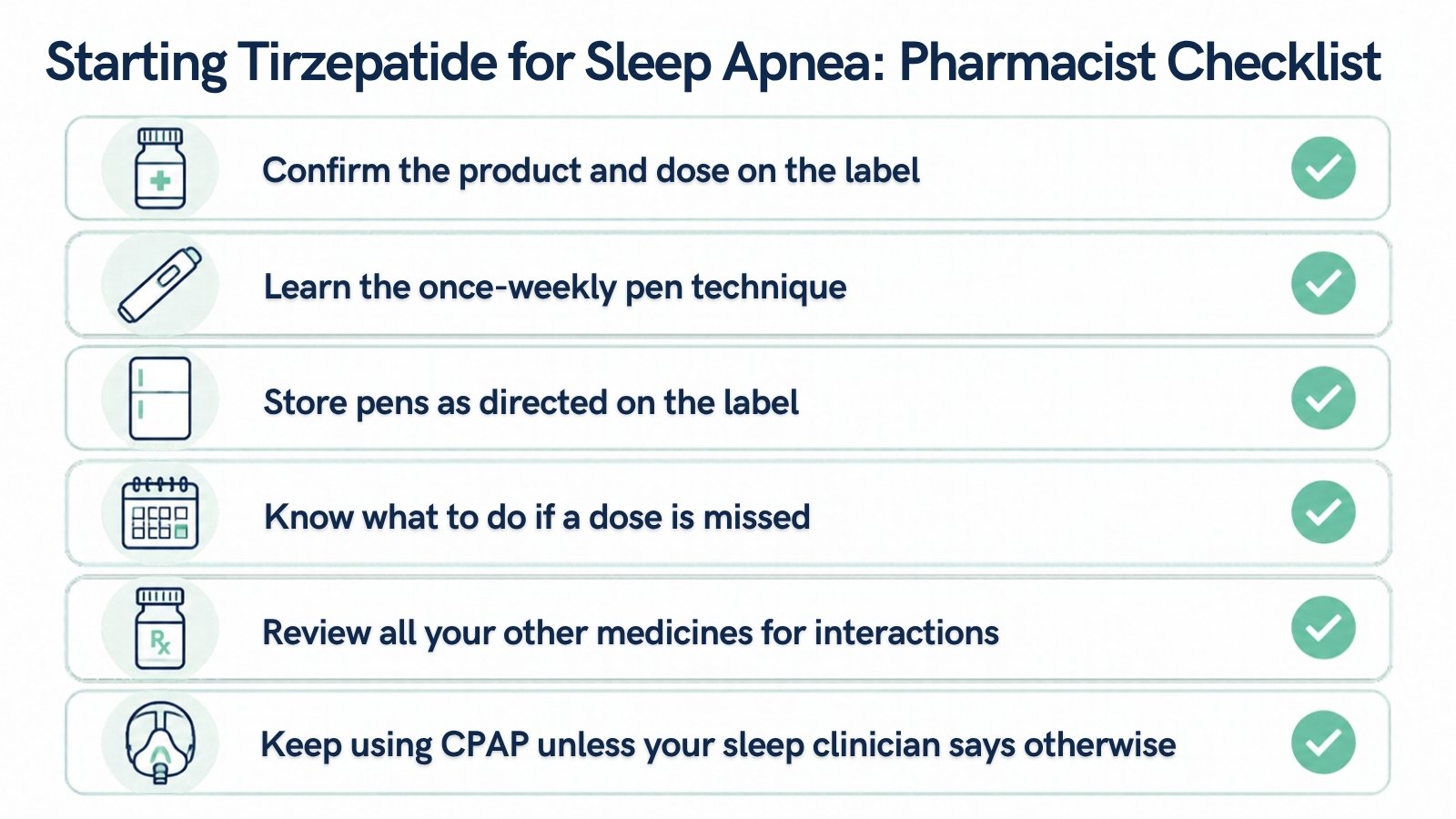
Tirzepatide is given once a week as an injection under the skin, typically in the abdomen, thigh or upper arm. Doses usually start low and increase gradually over several weeks, which helps the body adjust and can reduce stomach side effects. Your prescriber decides the dosing schedule.
Practical points pharmacists commonly cover include:
Technique. Ask for a demonstration the first time. Follow the instructions for use that come with your pen exactly, and rotate injection sites.
Same day each week. Choose a day you will remember. Set a reminder on your phone.
Missed doses. The instructions explain what to do if you miss a dose, which depends on how long it has been. Do not double up without checking the label or asking your pharmacist.
Storage. Store pens exactly as the label directs, including refrigeration requirements and any allowed time outside the fridge. Do not freeze, and protect from light.
Disposal. Use a sharps container for used pens or needles, following local disposal rules.
Interactions to Discuss With Your Pharmacist
Tirzepatide slows stomach emptying, which can change how quickly some medicines taken by mouth are absorbed. That matters most for medicines where small changes in blood levels are important. Our explainer on how medication interactions work, including with supplements, food and alcohol covers the general principles.
Specific points to raise:
Diabetes medicines. Combining tirzepatide with insulin or sulfonylureas can increase the risk of low blood sugar. The trials excluded people with type 2 diabetes, so this applies mainly to people using tirzepatide for other approved reasons, but your full medicine list still matters.
Oral hormonal birth control. The prescribing information advises that tirzepatide may reduce the effectiveness of oral hormonal contraceptives, particularly after starting treatment and after dose increases. Ask your prescriber or pharmacist about appropriate options.
Blood pressure medicines. As weight falls, blood pressure often falls too. If you take blood pressure medicine, monitor your readings and report dizziness. The Peptides Blog has a related review of blood pressure changes reported with tirzepatide.
Sedatives and sleep medicines. These are relevant to sleep apnea in general, because they can relax airway muscles. Review any sleeping pills, opioids or sedating medicines with your prescriber.
Who Needs Extra Caution
Beyond the contraindications on the label, some people need particular care or discussion before starting tirzepatide. That includes anyone with a history of pancreatitis or gallbladder disease, people with kidney problems who could be harmed by dehydration, people with severe stomach or bowel conditions such as gastroparesis, those with diabetic eye disease who also take diabetes medicines, and anyone who is pregnant, breastfeeding or planning a pregnancy. People scheduled for surgery or procedures involving anaesthesia should tell their care team they use tirzepatide, since slowed stomach emptying can matter in those situations. Your prescriber and pharmacist can weigh these factors with you.
Managing Nausea and Stomach Symptoms
Gastrointestinal effects are the main reason people struggle in the first weeks of treatment, and simple steps often help. Eat smaller meals and stop when you first feel full rather than finishing the plate. Avoid very rich, fatty or fried foods, especially in the days after an injection. Eat slowly and avoid lying down soon after eating. Sip fluids steadily through the day to avoid dehydration, particularly if you have diarrhea or vomiting. Many people find symptoms ease as their body adjusts, and doses are increased gradually for this reason. If symptoms are severe or do not settle, contact your prescriber; dose adjustments may help, and persistent vomiting needs prompt attention.
Common Side Effects and What to Do
| Side effect | How common | Practical tips |
|---|---|---|
| Nausea | Common, especially when starting or increasing dose | Eat smaller meals, stop eating when full, avoid very fatty foods |
| Diarrhea or constipation | Common | Stay hydrated; ask your pharmacist about suitable remedies |
| Vomiting | Less common | Replace fluids; contact your prescriber if it persists |
| Injection site reactions | Possible | Rotate sites; report spreading redness or swelling |
| Severe abdominal pain | Uncommon but serious | Seek medical care promptly; may signal pancreatitis or gallbladder problems |
What About CPAP?
This is the question pharmacists hear most often. The short answer: keep using PAP unless your sleep clinician tells you otherwise.
The prescribing information explains that people in the PAP trial paused PAP for seven days before the main sleep measurement, and that the trials did not evaluate when it is appropriate to stop PAP for people who had been using it as prescribed. The trials compared tirzepatide with placebo, not with PAP. Any change to your PAP use should follow a reassessment by your sleep clinician, which often includes a repeat sleep study once weight and symptoms have changed.
What the Trials Did Not Cover
Every approval has edges, and knowing them helps you understand whether the evidence applies to you. The SURMOUNT-OSA trials enrolled adults with obesity and moderate to severe obstructive sleep apnea who did not have type 2 diabetes, and followed them for 52 weeks. They did not study central sleep apnea, mild sleep apnea, people without obesity, children or adolescents. They did not compare tirzepatide directly with CPAP, oral appliances or surgery. And they did not show whether benefits persist after the medicine is stopped. Because the improvement appears closely linked to weight loss, regaining weight could be expected to bring symptoms back, which is one reason ongoing follow-up matters.
Combining Tirzepatide With Other Sleep Apnea Treatments
For many patients, tirzepatide will be one part of a combined approach rather than a stand-alone fix. Someone already using CPAP might continue it while losing weight, and then have their device settings or need for therapy reassessed later. Someone who could not tolerate CPAP might use tirzepatide alongside an oral appliance or positional therapy, depending on their sleep specialist’s advice. The goal is the combination that controls breathing during sleep most effectively for that person, judged by follow-up testing rather than by how they feel alone.
Supply, Authenticity and Safe Sourcing
High demand for GLP-1 based medicines has encouraged counterfeit and unregulated products, often sold online without a prescription or labelled “for research use only.” These are not the approved medicine, may contain the wrong substance or dose, may not be sterile, and are not covered by the trial evidence. Use a licensed prescriber and a licensed pharmacy. If packaging, pen appearance or labelling looks unusual, ask your pharmacist before using it. If you want to understand why the word “peptide” on an online product tells you so little about its safety, The Peptides Blog’s plain explainer on what the term peptide really describes is a helpful read.
Travelling With Tirzepatide
If you travel, plan ahead. Keep pens in your carry-on bag rather than checked luggage, where temperatures can vary, and carry them in their original packaging with the pharmacy label. Check the storage directions for how long pens may be kept outside the refrigerator and at what temperature. Bring a sharps container or a safe disposal plan, and pack enough supply for the trip plus a little extra in case of delays. If you are crossing time zones, ask your pharmacist how to keep your weekly dose on schedule.
Lifestyle Measures Still Count
The sleep apnea indication specifies use alongside a reduced-calorie diet and increased physical activity. Other habits help too: avoiding alcohol and sedatives near bedtime, sleeping on your side if you snore mainly on your back, not smoking, keeping a regular sleep schedule and treating nasal congestion. These support both your medicine and any device you use.
Tracking Your Progress
Because tirzepatide’s sleep apnea benefit is closely tied to weight loss, it helps to track a few things over time. Record your weight weekly at the same time of day. Keep notes on snoring, night-time awakenings and daytime sleepiness, ideally with input from a bed partner. If you use a CPAP machine, many devices record usage hours and leak data, which your sleep clinician can review. Bring this information to follow-up visits. It gives your care team a clearer picture than memory alone and helps them decide when a repeat sleep study makes sense.
Cost and Coverage
Insurance coverage for GLP-1 based medicines varies widely and can depend on the approved use for which they are prescribed. A sleep apnea indication may be treated differently from a weight management indication by some plans. Your pharmacy team can help check coverage, explain prior authorisation requirements and look at manufacturer support programmes where they exist. Be cautious of very cheap offers from unfamiliar online sellers, which are a common route for counterfeit products.
Questions to Bring to the Pharmacy Counter
Is this the product and dose my prescriber intended? How exactly do I use and store this pen? What should I do if I miss a dose or feel very nauseated? Do any of my other medicines or supplements interact with it? Will it affect my birth control? What side effects mean I should call my prescriber right away? Should I keep using my CPAP? Writing these down before your visit makes it easier to cover everything, and bringing a current list of all your medicines and supplements lets the pharmacist check for interactions on the spot.
Reading the Research Behind New Approvals
New approvals often generate headlines that compress complex trial data into a single sentence. If you like to understand the evidence yourself, it helps to know how to read a trial summary: who was studied, what was measured, how big the difference was compared with placebo, and what was not tested. The Peptides Blog’s guide on reading peptide medicine research critically walks through those steps clearly. For a wider view of how sleep apnea research is developing, NHLBI summarises its own sleep apnea research programmes, including work on helping people stick with PAP treatment.
Bottom Line
Tirzepatide’s approval for obstructive sleep apnea gives adults with obesity and moderate to severe OSA a new, evidence-based option that works largely through weight loss. Like any prescription medicine, it comes with specific warnings, interactions and handling steps, and it does not replace a sleep specialist’s judgment about PAP or other treatments. Your pharmacist is a valuable partner in using it safely, from the first pen demonstration to reviewing new medicines along the way.
For clear, sourced explanations of peptide medicine research, explore peptide benefits and the research behind them at The Peptides Blog’s library of trial explainers, an independent educational publication that does not sell medicines or offer medical consultations.
Frequently Asked Questions
Is tirzepatide approved for sleep apnea?
In the United States, Zepbound is approved for moderate to severe obstructive sleep apnea in adults with obesity, used with a reduced-calorie diet and increased physical activity. Approval status varies in other countries.
Is Mounjaro the same as Zepbound?
Both contain tirzepatide, but they are approved for different uses. Mounjaro is approved for type 2 diabetes, while Zepbound is approved for chronic weight management and obstructive sleep apnea in specified adults.
Should I stop CPAP when I start tirzepatide?
No, not unless your sleep clinician advises it. The trials did not evaluate when it is appropriate to stop PAP therapy.
Does tirzepatide interact with birth control pills?
The prescribing information advises that tirzepatide may reduce the effectiveness of oral hormonal contraceptives, especially after starting and after dose increases. Discuss options with your prescriber or pharmacist.
What are the most common side effects?
Nausea, diarrhea, constipation and vomiting are the most common, especially when starting or increasing the dose.
How is tirzepatide given?
It is injected under the skin once a week using a pen, usually in the abdomen, thigh or upper arm, following the instructions for use and your prescriber’s dosing schedule.
Pharmacy information disclaimer
This article provides general educational information and does not replace advice from your doctor, pharmacist or sleep specialist. It does not recommend any medicine for any individual and must not be used to diagnose or treat sleep apnea. Always follow the prescribing information and instructions supplied with your medicine.
Tirzepatide is a prescription medicine with significant risks and must only be used under medical supervision and dispensed by a licensed pharmacy. Never stop or change CPAP or any prescribed treatment without professional guidance. Approvals and labelling differ between countries and may change. Seek urgent care for severe abdominal pain, signs of an allergic reaction or other serious symptoms.

Scott Hunter
More articles by this author